
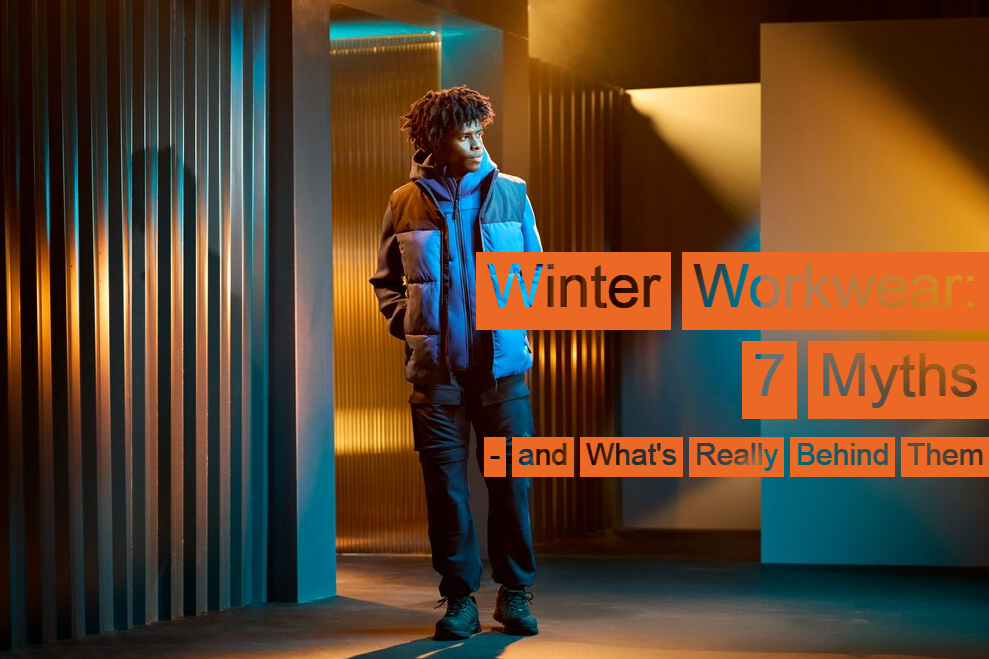
When temperatures drop, many companies automatically reach for heavier clothing. Following the motto: the more fabric, the better. But this is exactly where problems begin. Modern winter workwear has long stopped being about heavy jackets that restrict movement.
For companies, a closer look is worthwhile: equipping employees properly in winter increases not only comfort but also safety, performance, and efficiency.
It’s high time to bust a few persistent myths.
Myth 1: The thicker the jacket, the warmer
The reality: warmth comes not from mass but from trapped air.
Modern insulation materials trap air efficiently without adding bulk. A lightweight, well-insulated jacket often keeps you warmer than a heavy, bulky model – while allowing greater freedom of movement.
Relevant for companies: less weight means less fatigue during long workdays.
Myth 2: Winter workwear doesn’t need to be breathable
The reality: breathability is crucial, especially in winter.
Anyone working will sweat – even at sub-zero temperatures. If moisture cannot escape, the body cools down. Result: feeling cold despite wearing warm clothing.
High-quality winter workwear therefore combines thermal insulation with effective moisture management.
Myth 3: Waterproof workwear isn’t breathable
The reality: modern membranes can do both.
Rain, snow, and wind are part of many professions’ daily winter routine. Clothing must be waterproof but also allow body heat to escape. Technical fabrics with membranes keep water out while letting water vapor escape.
Important for buyers: membrane quality is decisive – not just the label “waterproof.”
Myth 4: One layer is enough
The reality: the layering principle is also practical at work.
The proven three-layer system consists of:
- Base layer: wicks moisture away from the body
- Mid layer: retains heat
- Outer layer: protects against wind and wet conditions
This principle allows flexible adaptation to changing tasks and temperatures, reliably wicks moisture, and keeps the body warm.
Myth 5: Winter workwear restricts movement
The reality: mobility is now a central design goal.
Ergonomic cuts, stretch zones, and flexible materials ensure modern winter clothing does not restrict movement – even with multiple layers.
Result: higher employee acceptance and less improvisation with unsuitable clothing.
Myth 6: Visibility only matters at night
The reality: winter also brings poor visibility during the day.
Fog, snow, and low sun reduce perception and increase the risk for people working outdoors. Integrated warning and reflective elements significantly increase safety, especially in road construction, industry, logistics, and construction sites.
Myth 7: High-quality winter workwear is unnecessarily expensive
The reality: it’s an investment that pays off long-term.
Well-equipped employees work more focused, safely, and efficiently. Fewer sick days, higher motivation, and lower accident risk positively impact costs and productivity over time.
Conclusion: modern winter workwear increases safety and efficiency
Winter workwear today is a technical product that does much more than just keep you warm. Challenging myths and choosing well-designed gear creates better working conditions – for employees and companies alike.
Check out our selection and find the right models for your company!