
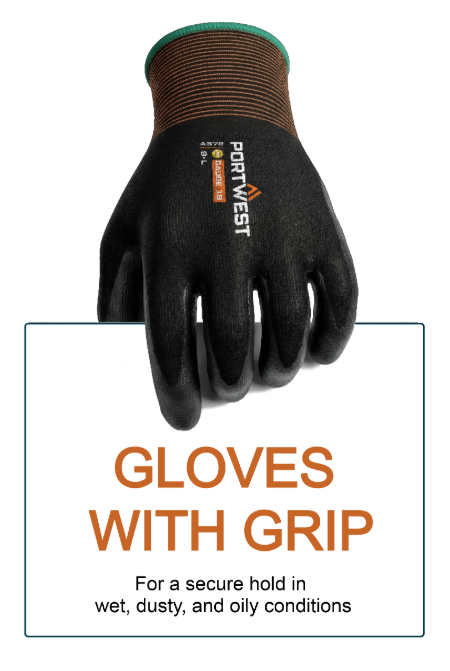
Grip gloves are essential wherever safe handling and controlled movement are required. Typical applications include order picking, packaging, warehouse work, assembly, light to medium workshop tasks, maintenance, service work, and general parts handling. They are also often a good choice in automotive supply, internal material flow, or the assembly of smaller components, provided the specific risk matches the glove’s level of protection.

Grip gloves are a standard part of personal protective equipment in many working environments. They are used wherever parts need to be held securely and tasks must be carried out in a controlled and precise way. In day-to-day use, it is not only the protective function that matters, but above all the combination of grip, comfort, and freedom of movement. These are the qualities that determine whether a glove truly performs in practice.
What makes a good grip glove
A high-quality grip glove is defined first and foremost by reliable grip. It should perform not only on dry surfaces, but also provide secure handling in damp or slightly oily conditions. Nitrile coatings have proven particularly effective for this, because they are robust, grippy, and versatile across a wide range of tasks.
Fit is equally important. A good glove fits snugly without restricting movement and preserves fingertip sensitivity. Only then can precise work be carried out effectively. Practical features such as a breathable seamless liner, low-lint construction, and a material mix that balances flexibility and durability also make a noticeable difference in daily use.
Relevant standards
CE marking
Confirms that the glove meets the essential requirements of the European PPE Regulation.
EN 407
Relevant for gloves that protect against heat and thermal risks.
EN ISO 21420
Defines the general requirements for protective gloves, including ergonomics, harmlessness, marking, and dexterity.
EN 511
Applies to protective gloves against cold.
EN 388
Protection against mechanical risks such as abrasion, cut, tear, and puncture.
EN 16350
Relates to electrostatic properties in sensitive working environments.
EN ISO 374
Relevant for working with chemicals and microorganisms.
Other featured grip gloves
Depending on the application, it can be useful to compare different models. The gloves below cover a range of needs, from precision handling and high-grip latex coatings to touchscreen-compatible options for everyday work.
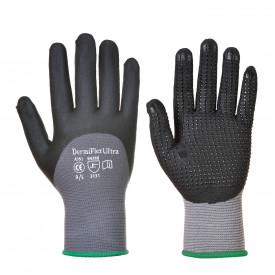
DermiFlex Ultra Plus Glove A353
Grip glove with nitrile coating for precise work in dry and slightly damp conditions.
View product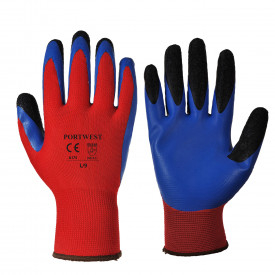
Duo-Flex Glove A175
Robust latex glove for tasks where secure grip and a durable coating are essential.
View product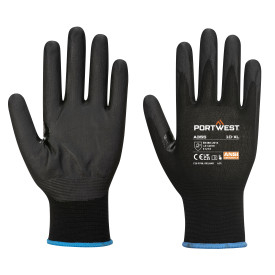
NPR15 Touchscreen Glove A355
Nitrile foam glove with touchscreen compatibility for environments where grip and device use need to go together.
View product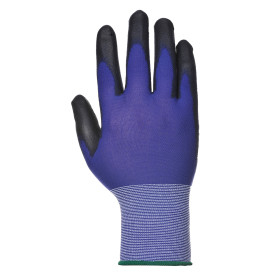
Senti-Flex Glove A360
Lightweight glove for fine and agile tasks, with a strong focus on comfort and tactile sensitivity.
View product