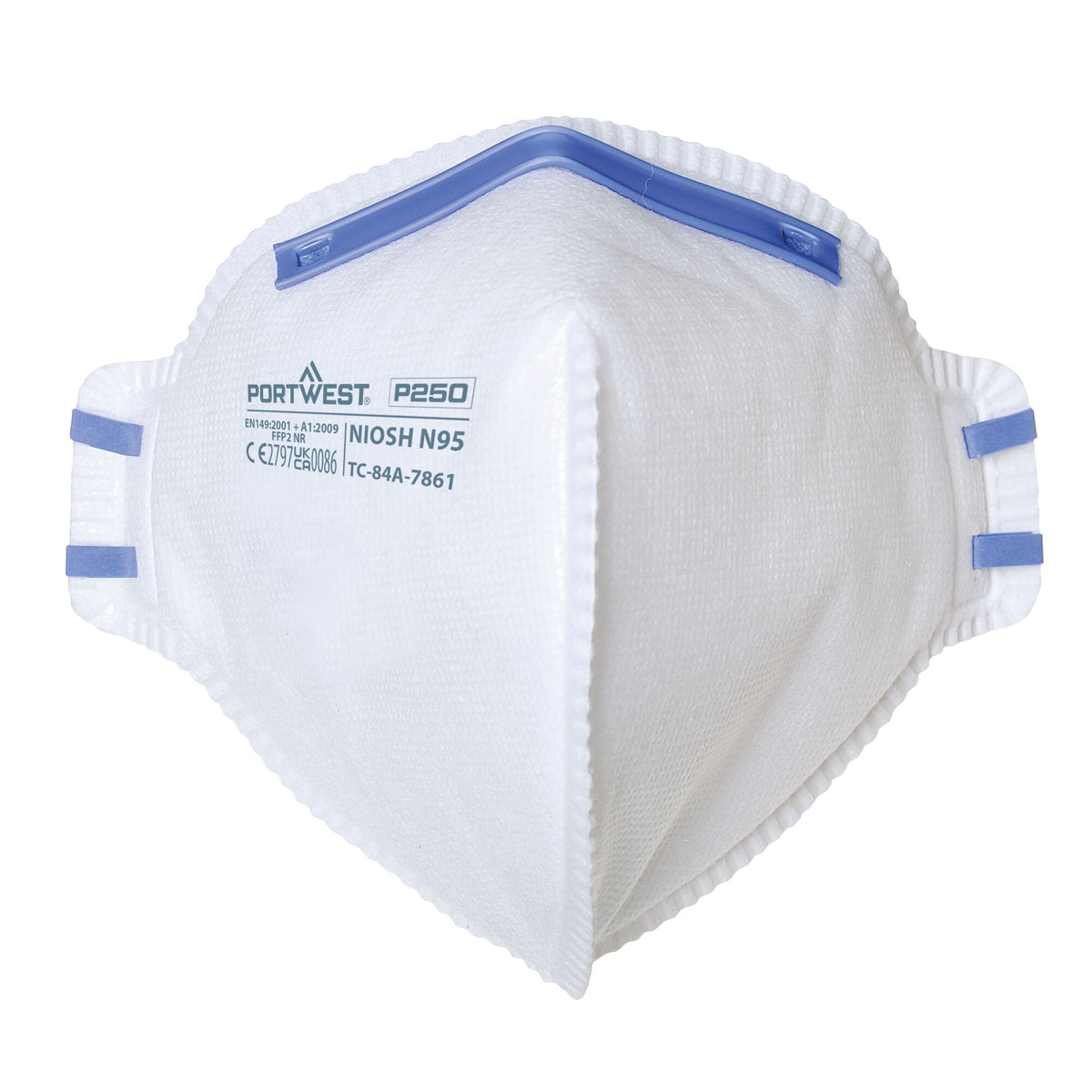
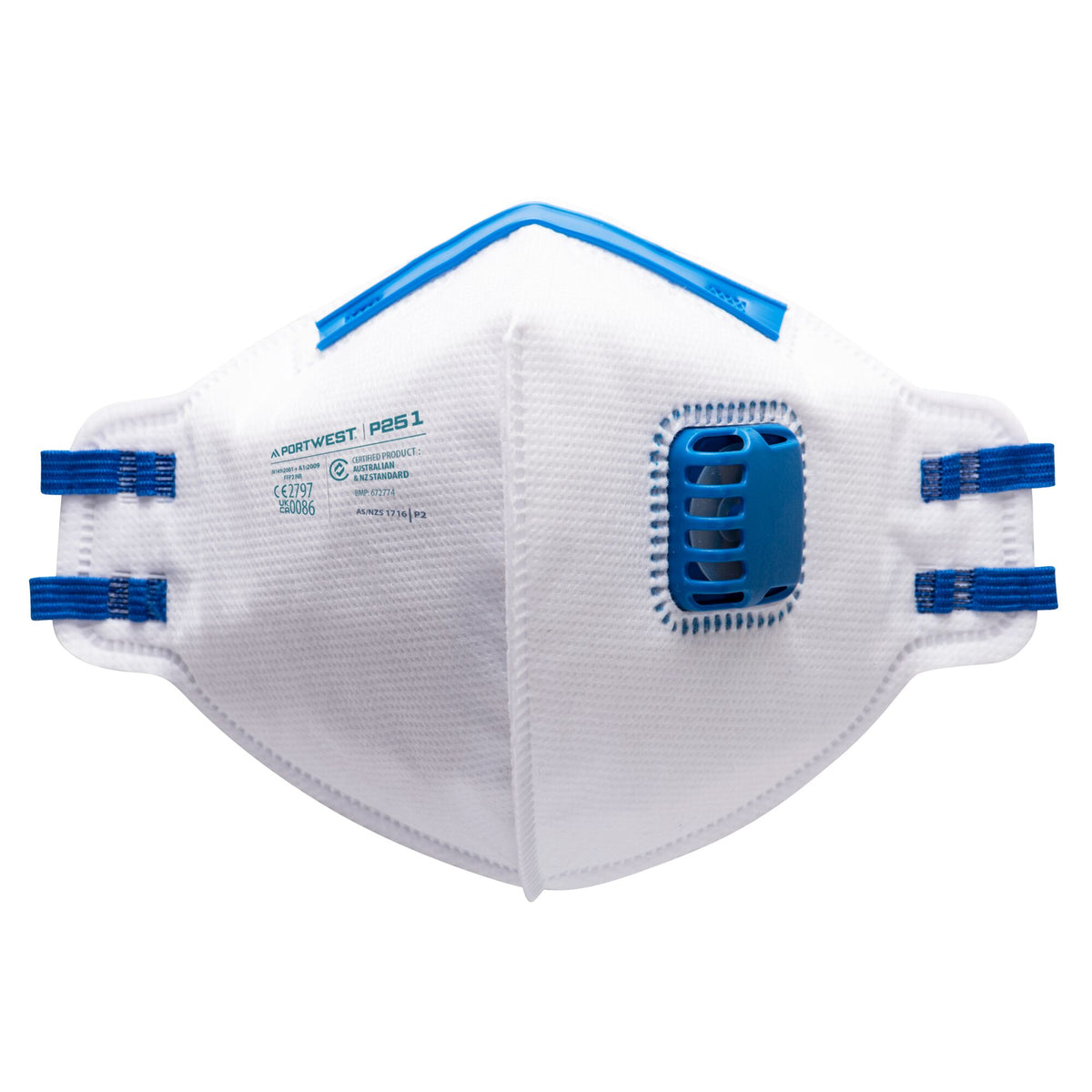
Choose based on what's in the air
For dust and particles, work with the FFP classes according to EN 149: FFP1 blocks about 80 percent and is intended for coarse, non-toxic dust; FFP2 about 94 percent, suitable for wood and metal dust; FFP3 about 99 percent, needed for silica dust and other harmful substances. If it involves solvents, paint fumes or gases, a dust mask won't help and you need a half-mask with the right gas filter, identifiable by the letter and color code on the filter.
Fit matters more than class
An FFP3 mask that leaks along your cheek protects less than a well-sealed FFP2 mask. Bend the nose clip properly, check the seal with the palm test, and keep in mind that a beard or stubble makes a proper seal impossible. If you combine the mask with safety glasses, choose a version with anti-fog coating, since exhaled air escaping past the mask fogs up the glasses.