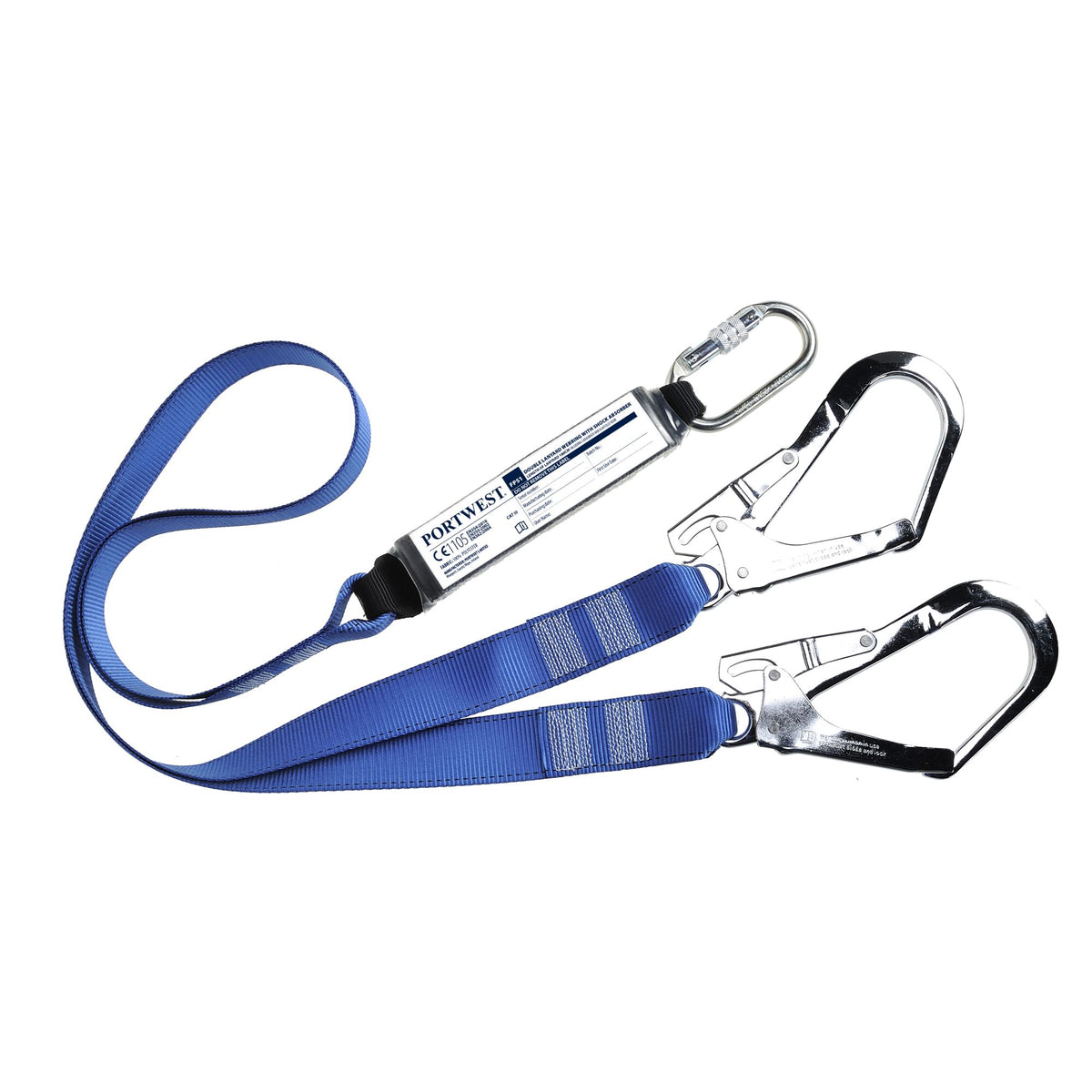
The Portwest twin leg lanyard with shock absorber is an essential part of your fall protection equipment when you need to work safely at heights. This reliable twin leg lanyard is specifically designed for professionals in construction, industry, and scaffolding who need to remain secured at all times. Thanks to its robust construction, this safety product provides the necessary protection against fall hazards in the workplace.
For which tasks and sectors is this twin leg lanyard with shock absorber most suitable?
This twin leg lanyard with shock absorber is extremely suitable for work on scaffolding, roofs, and other high structures within the construction and industrial sectors.
Thanks to the twin leg design, you can reposition yourself alternately while moving, ensuring that you remain secured to an anchor point at all times. The large scaffold hooks with a 52 mm opening make it easy to quickly and safely hook onto various scaffold tubes and structural parts, which significantly increases safety during intensive movement.
What do the standards EN 354, EN 355, and EN 362 mean for this twin leg lanyard with shock absorber?
These standards guarantee that the twin leg lanyard with shock absorber meets the strict European safety requirements for fall protection.
The EN 354:2010 standard certifies the lanyards, while EN 355:2002 specifically oversees the shock absorber that minimizes the impact of a potential fall to a safe level. The EN 362:2004 standard relates to the reliability of the connectors, such as the carabiner with a 19 mm opening and the large scaffold hooks, ensuring you are guaranteed an extremely secure connection.
The durable, strong webbing has a maximum rated load of 100 kg and a shelf life of 10 years from the date of manufacture.
Features:
- Durable, strong webbing
- 52mm opening on scaffold hooks
- 19mm carabiner opening
- Maximum rated load of 100 kg
- 10-year shelf life from the date of manufacture, as stated on the product label
- CE certified
- UKCA marked
- Retail box for retail presentation
Standards: EN 354:2010, EN 362:2004, EN 355:2002