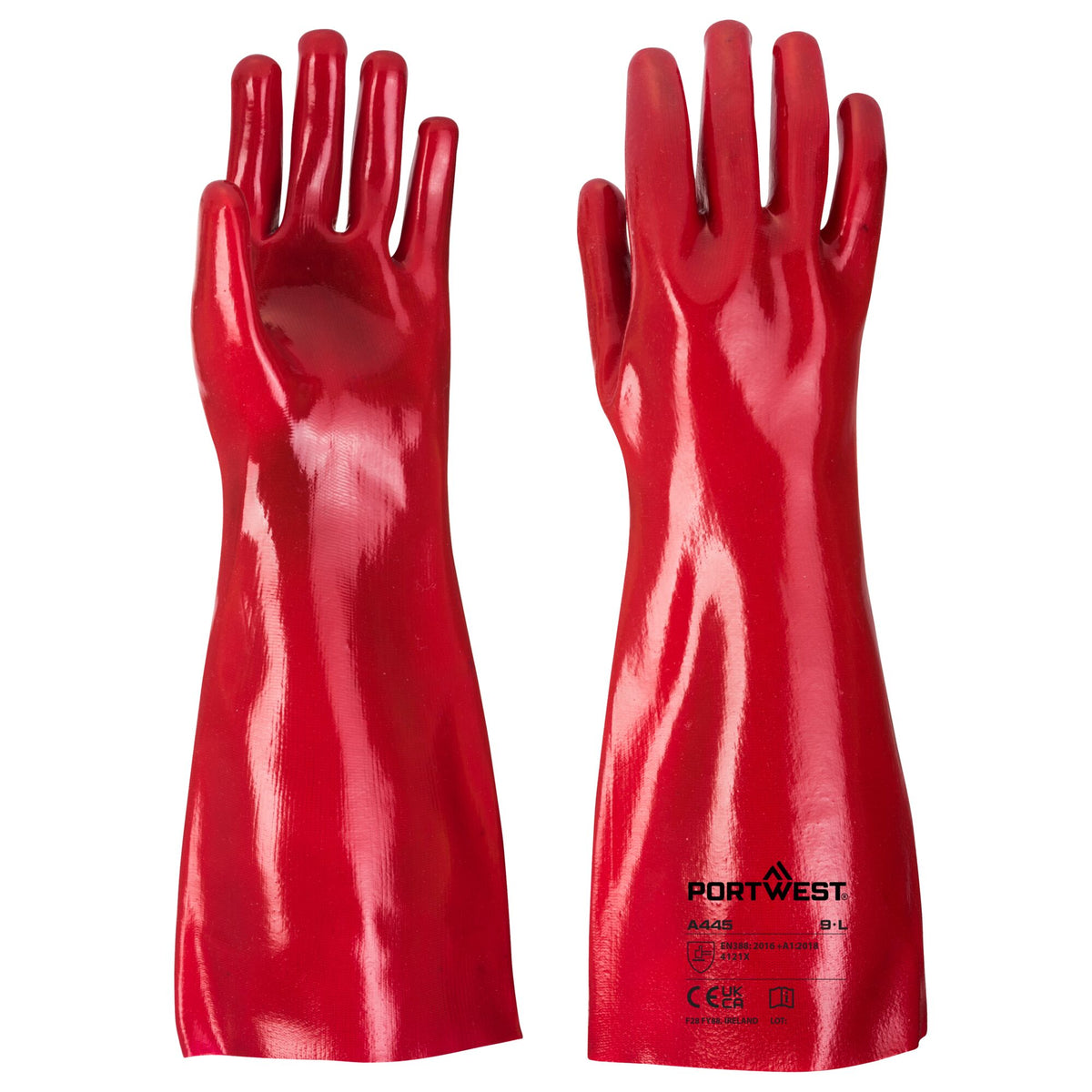
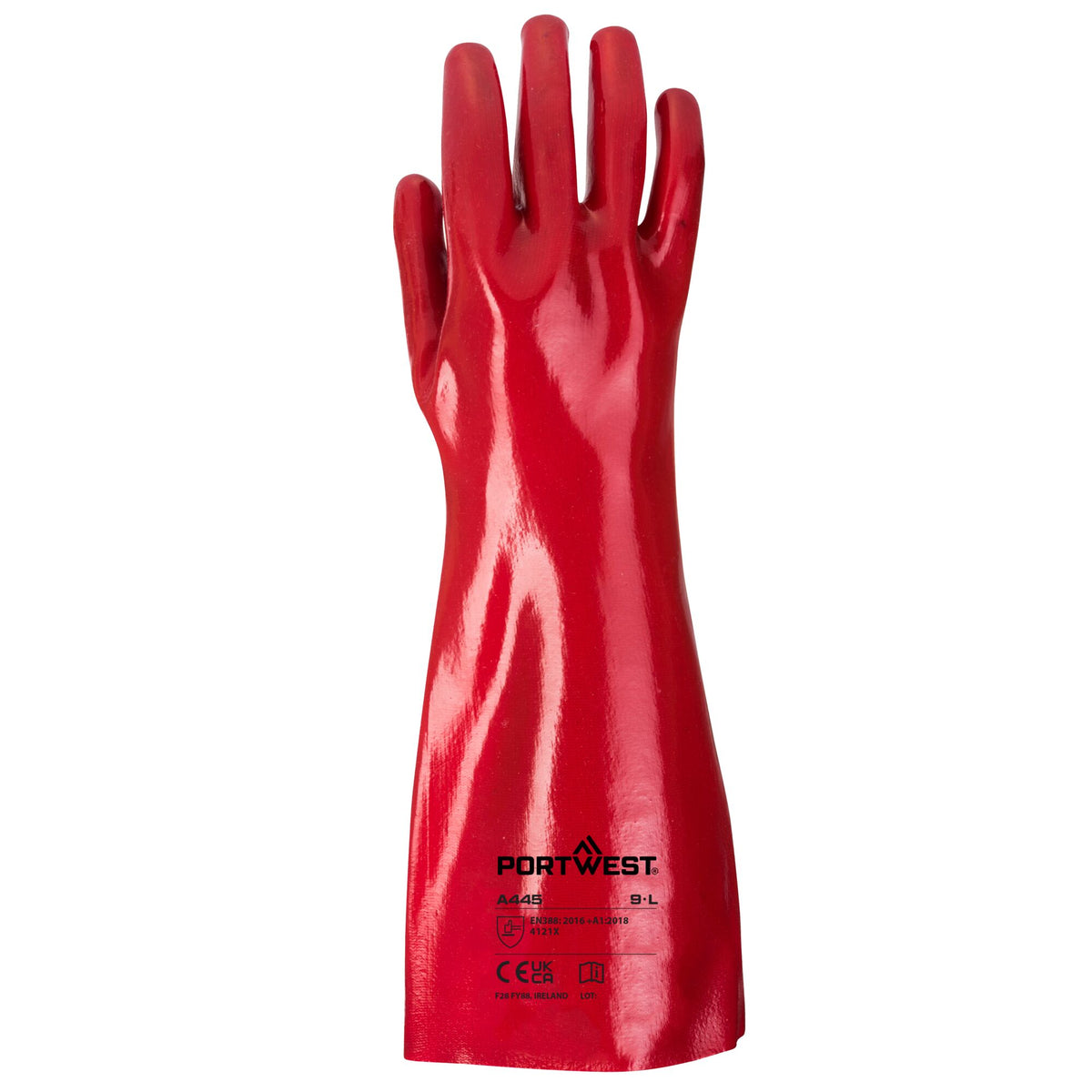
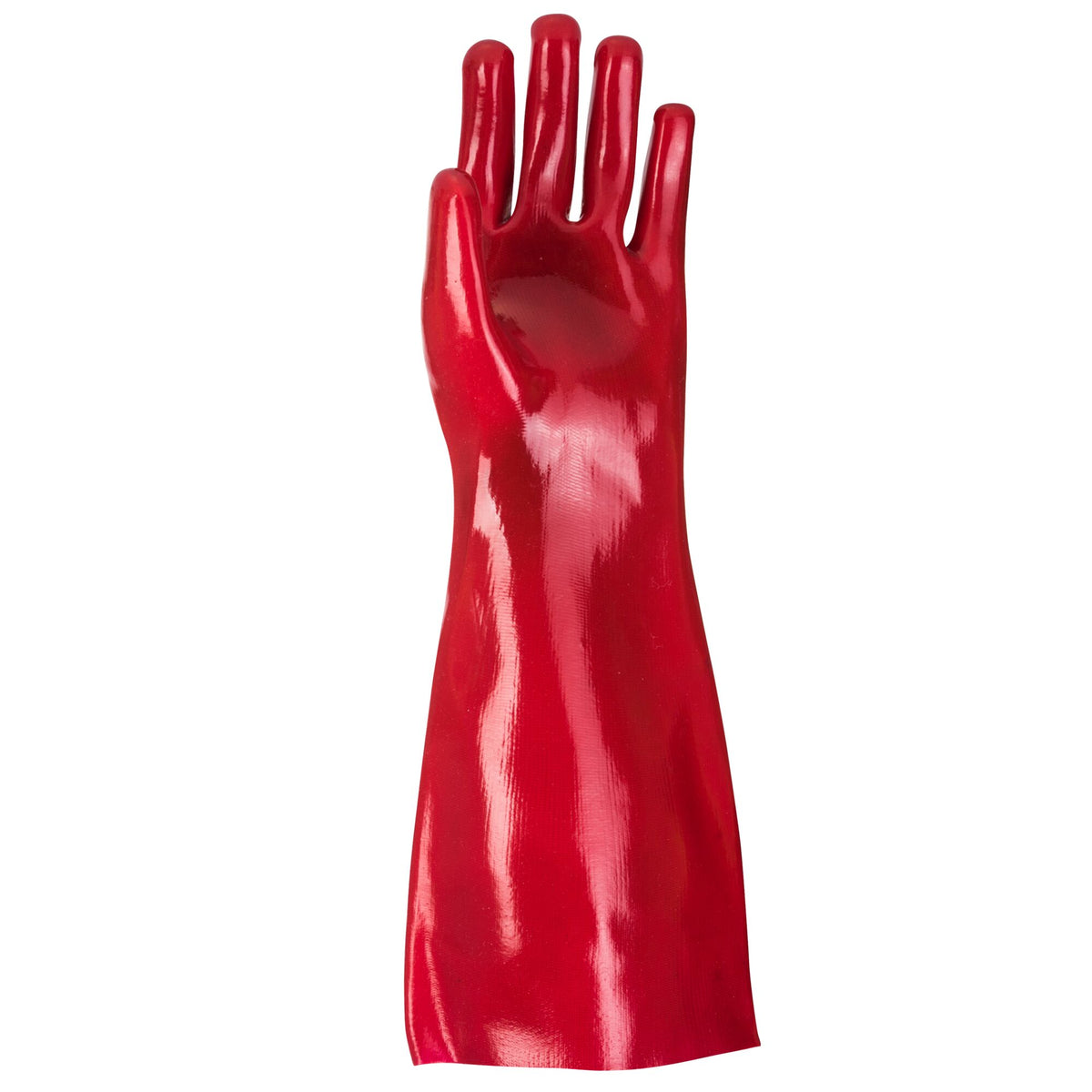
The Portwest PVC work glove is a reliable choice for professionals who require effective daily hand protection for a variety of tasks. These fully coated gloves are specifically designed to keep your hands dry and safe in damp work environments. Thanks to the flexible base and strong polyester lining, this model offers an excellent balance between dexterity and mechanical resistance for diverse industrial and logistical tasks.
Which specific tasks is this PVC work glove best suited for?
These liquid-proof gloves are ideally suited for tasks where you come into direct contact with water, oils, or other liquids. Thanks to the full PVC coating, your hands remain optimally protected against moisture penetration.
The glove is frequently used in the cleaning sector, agriculture, and for light industrial assembly work. Because this model is produced phthalate-free, it is also a responsible choice for prolonged daily use in various work environments where hygiene and safety play a major role.
What do the mechanical standards for this PVC work glove mean?
This model complies with the strict EN 388: 2016 + A1: 2018 standard with a score of 4121X, which indicates a very high abrasion resistance of level 4. This means the glove is resistant to intensive friction and is long-lasting.
In addition, the EN ISO 21420: 2020 standard with dexterity class 5 guarantees that you maintain maximum mobility and grip despite the protective coating. This makes the glove highly suitable for precision work.
The durable 12-gauge polyester lining ensures a flexible fit. The glove is available in lengths up to 450 millimeters.
Features:
- Available in 3 lengths, 27cm, 35cm, and 45cm
- 12-gauge liner ensures the outer coating has a strong yet flexible base
- Polyester is stronger than natural fibers and offers sufficient durability
- Fully coated for maximum liquid protection
- Phthalate-free
- Excellent abrasion and tear resistance
- Maximum EN level 4 abrasion resistance
- 450 mm length
- CE certified
Standards: EN ISO 21420: 2020 Dexterity 5, EN 388: 2016 + A1: 2018 (4121X)